Holiday Youth Friendly Sexual & Reproductive Health training
All societies experience violence, but its context i.e. the circumstances in which it occurs, its nature and society’s attitude towards it varies greatly from one setting to another. Therefore understanding the context is very important for effective prevention and response work. As research shows, violence is often predictable and preventable and stakeholders need to guard against acting on assumptions or anecdotal evidence alone, and adopt prevention strategies that are based on vast knowledge and understanding of the local context where interventions are being carried out.
A general analysis of the root causes of violence gives useful insights and helps to identify possible avenues for prevention and response. There is, however, often a huge gulf between observing an effect and understanding how it operates. Certain factors appear to be strongly predictive of violence, even if direct causality is sometimes difficult to establish. Identifying these factors can provide timely warning to individuals and stakeholders that action is required. Moreover, the array of tools with which to take action is growing to include less costly measures like assertiveness and boundary setting, and where need be self defense.
Traditional cultural practices reflect the values and beliefs held by members of a community for a period often spanning generations. Some of these practices are a clear violation of human rights and have been outlawed in our country. However despite their nature and their violation of national and international human rights laws, these practices continue to thrive because they are rarely questioned or challenged and therefore take on an aura of morality in the eyes of those adhering to them.
Female Genital Mutilation (FGM), child marriage and other forms of Sexual and Gender Based Violence (SGBV) are among these practices that deter women and girls from realizing their full potential and enjoying their human rights to the maximum. The danger of such practices is that women and girls whose rights to personal safety and well-being are violated are at increased risk of long-life developmental challenges, and other physical, emotional and social problems. These outcomes compromise local, national and international efforts towards attaining development.
Wherever prevention programmes are planned, the context of violence must be understood in order to tailor the intervention to the targeted population. Upstream investment brings downstream results. There is a tendency for authorities to act only after violence has occurred. However, investing in preventive interventions may be more cost-effective and have major and long-lasting benefits.
Such interventions need to employ a multi-tier approach that factor in different levels of prevention where level efforts areaimed at averting violence before it occurs, secondary level efforts are aimed at the more immediate responses to violence, such as pre-hospital care, emergency services or treatment for sexually transmitted diseases following a rape/defilement, and where tertiary level efforts are focused on long-term care in the wake of violence, such as rehabilitation and reintegration, and attempts to lessen trauma or reduce the long-term disability associated with violence whenever it occurs.
These three levels of prevention are defined by their temporal aspect – whether prevention takes place before violence occurs, immediately after the incident or over the longer term. While these levels of prevention have traditionally been applied to victims of violence and within health care settings, they are also relevant to the perpetrators of violence, and can therefore be used to characterize judicial responses to violence.
It is also important to advocate for and support the efficient delivery of a holistic, youth-friendly health-care package of services for young people including universal access to accurate sexual and reproductive health information, and to ensure the prevention and management of sexually transmitted infections, including HIV are available to young people who are marginalized or hard to reach.
By putting in place a number of measures among them improving access to comprehensive sexuality education, providing preventive, diagnostic and treatment of Sexually Transmitted Infection (STIs), offering specialized counseling services for young people etc, the Kakenya’s Dream Organization gives young people the opportunity to know and exercise their rights, including the right to delay their sexual debut, delay marriage as well as exercise the right to refuse unwanted sexual advances.
It is also important to ensure availability of youth friendly services to young people including those who are marginalized and hard to reach. Similarly, it is important to advocate for and support efficient delivery of a holistic, youth-friendly health-care package of services for young people including universal access to accurate sexual and reproductive health information, and to ensure prevention and management of sexually transmitted infections, including HIV.
I’m Worth Defending (IWD) has over the years been successfully implementing similar trainings in different communities here in Kenya, with positive outcomes being achieved. Although IWD’s interventions equally target men and boys, most of the focus is on women and girls who happen to be the most affected when it comes to sexual and gender-based violence (SGBV).
The World Health Organization (WHO) defines an adolescent as an individual in the 10-19 years age group and usually uses the term young person to denote those between 10 and 24 years. Adolescence is a period of transition from childhood to adulthood during which adolescents develop biologically and psychologically and move towards independence.
Normally, the assumption across the board is that adolescents are a healthy group but the reality is that many die prematurely and unnecessarily through suicide, violence and pregnancy-related complications. It is also worth noting that some of the serious conditions of adulthood like sexually transmitted infections (STIs) and HIV have their roots in adolescent behaviour.
The onset of adolescence brings not only changes to their bodies but also new vulnerabilities to human rights abuses, particularly in the arenas of sexuality, marriage and childbearing. Oftentimes, girls are coerced into unwanted sex Female Genital Mutilation and in most cases marriage, putting them at risk of unwanted pregnancies, unsafe abortions, sexually transmitted infections (STIs) including HIV, and dangerous childbirth.
This is in spite of Kenya having a robust framework on child protection and on dealing with reproductive health matters amongst young people. It is sad to note that in this time and age, too many young people are still facing barriers to reproductive health information and care, and that even those who are able to find accurate information about their health and rights, oftentimes are not able to access the services needed to protect their health. It is for this reasons that adolescents’ sexual and reproductive health must be given first priority.
The negative health consequences of adolescence can pass from one generation to the next, a case in example being that babies born to adolescent mothers have a high risk of being underweight or stillborn. They are also likely to suffer from the same social and economic disadvantages encountered by their mothers. That is why addressing the needs of adolescents is an intergenerational investment with huge benefits to subsequent generations.
When it comes to designing of health services, most interventions are not designed specifically to meet the needs of adolescents and health workers only occasionally receive specialist training in issues pertinent to adolescent sexual health. It is perhaps not surprising therefore that there are particularly low levels of health-seeking behaviour among young people.
Dates and Venue(s)
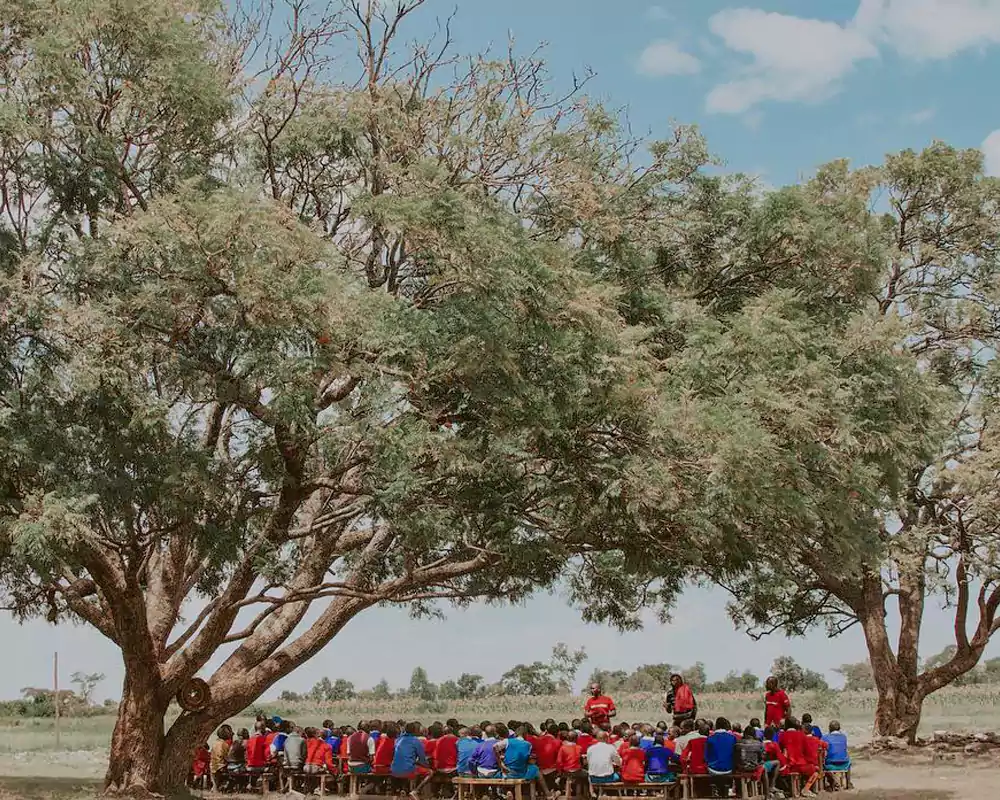
These trainings took place in Transmara, Narok County at two venues namely: the Enkakenya Centre for Excellence and Olereko primary school, and were conducted over a period of eleven days between 16th November and 29th November 2023. Facilitation
Life skills training, Sexual Reproductive Health Rights (SRHR), and Self Defense training are the main aspects of I’m Worth Defending (IWD) curriculum that was used during these series of trainings. This series of trainings was facilitated by a team of six facilitators from I’m Worth Defending (IWD), with four out of the six facilitators being female.
Participants
This series of workshops targeted teen girls drawn from schools within the neighborhood and their counterparts from schools in other parts of the country. In total, the trainings reached six hundred and seventy seven (677) girls and boys.
Content
The content for this workshop were generated primarily from the facilitators and the participants and included general knowledge on Self Defense, Adolescence & Reproductive Health (ASRH), Sexual & Gender-Based Violence (SGBV), HIV/AIDS, Life kills and Leadership and other related issues.
Physical and verbal Self- Defense, Assertiveness and Boundaries Setting training formed the basis of learning in the teen girls’ class.
Teen Girls Class
The sessions saw the facilitators guide the girls through assertiveness and boundary setting training, life skills and leadership principles as well as self-defense training in a highly entertaining and educative way. The facilitators also dedicated a reasonable amount of time to address critical issues related to adolescence and puberty, paying attention to the risks that girls encounter in life.
Approach and Methodology
The sessions were highly interactive and informative, with the girls being given “hands on” experience when it came to the physical self-defense training. Unlike the girls who were taken through the assertiveness and boundary setting training, the boys had the opportunity to interact with the male facilitators during the boys’ and young men’s class, where core life-skills and gender training took center stage.
The facilitators incorporated a mix of thematic and skills‐building sessions, as well as the opportunity for self‐reflection for the participants, and saw the facilitators impart knowledge and skills to the learners in a highly supportive, non‐threatening and engaging manner.
The sessions were highly interactive as the facilitators applied various approaches among them case studies, personal testimonies, buzz groups, role play, puppetry, plenary discussion, Q&A and group work, to guide the participants in the process of learning. The use of songs and games, drills and demonstrations was also embraced during training.
Boys Class
The boys’ class took place on day one, with the boys being sensitized on masculinities and how they affect the lives of women, girls, boys and men, as well as on the male privileges and their cost to the men and boys. The participants also had the privilege to learn the core life-skills and leadership principles in a fun-filled and enlightening manner that saw pupils from all the participating schools mingle through-out the day.
The sessions were aimed at triggering awareness in the minds of the participants on the role men and boys play in perpetrating and perpetuating SGBV and VAC and to change their attitude towards the women and girls. The facilitators emphasized on the need for them to shun negative masculinities and embrace positive ones in order for them to become responsible members of the society.
Team Building and Leadership
There were two separate team building and leadership i.e. The boys’ and the girls. In both, facilitators applied games and agility drills as a way of gauging the participants’ creativity, alertness as well as leadership. These exercises were conducted in order to introduce the participants to the basic principles of leadership and how the different traits and attributes affect the way individuals within a given setting relate with one another.
During these sessions, the facilitators engaged the participants in different exercises and games, followed by an in depth analysis of the emerging issues in order to demonstrate the different aspects of group dynamics and how these shape the interpersonal relationship(s) at the different levels of society. The participants were encouraged to embrace team spirit and strive to acquire good leadership skills in order to make the best out of life.
Participants’ Expectations
To help set the pace for learning, the facilitators sought to know the expectation that the participants when they came for this particular training. The following summarized list was generated as a result of their feedback.
- Gain more skills and insights on how to cope with different situations now and after school.
- Learn about challenges being faced by the girl child in the greater world and how they can be avoided.
- Learn more about life skills and how they are applicable in our day-day life.
- Refresh self-defense skills and improve on preparedness in the event of an attack.
- Learn more about Sexually Transmitted Infections (STIs) and how to avoid them.
Objectives
Overall objective of this report
This narrative report captures in detail what transpired during the eleven days period that the series of workshops were conducted in Kilgoris, Transmara, Narok County, courtesy of the Kakenya’s Dream Organization (KDO), with two of these workshops having been held at the Kakenya’s Center for Excellence in Enoosaen, and the third one at Olereko Primary School.
This report also takes into consideration the fact that gender violence and violence Against Children are complex vices that require concerted efforts in order for it to be effectively addressed. It is the written documentation of what transpired during the eleven days and highlights the achievements, emerging issues, challenges and recommendations on how to make the best out of similar trainings in future and maximize on the outcomes.
Broad Objective
The main aim of this training was to arm the teen girls with basic assertiveness & boundary setting principles, equip them with core life skills as well as with the basic Self-Defense Techniques, as tools with which to avert sexual violence and other gender based violence forms. It was also aimed at raising their knowledge and understanding on Gender Equality, Sexual and gender-based violence (SGBV) and other related issues and challenges that girls their age grapple with in life. The boys on the other hand were taken through life skills and a set of rules that are geared towards making them realize their full potential, and at the same time coexist peacefully with the girls and women.
Specific objectives
The specific objectives of the Teen Girls Class trainings were to:
- Provide Adolescent with quality and comprehensive education in the areas of sexual and reproductive health to support their ongoing success in the academic field;
- Create a safe and open environment in which the participants are able to engage and ask questions they may have;
- Provide the information and resources necessary for the adolescent to access sexual and reproductive health services when they need them;
- Encourage the adolescent to embrace abstinence in order to reduce the prevalence of unplanned pregnancy among the girls in the community;
- Train the participants on physical self-defense techniques as a means by which they can defend themselves in the event of an attack;
- Equip participants with the core life skills and assertiveness and boundary setting training, including verbal techniques of self-defense;
- Enlighten participants on how gender identities are socially constructed and how they contribute to GBV in families and communities;
- Encourage participants to break the silence on SGBV and other human rights violations in their lives and those of others;
- Enlighten participants on Sexual and Gender- Based Violence (SGBV) and how it affects the lives of individuals, families and entire communities;
- Engage the participants in teambuilding exercises to enhance team spirit & leadership.
The specific objectives of the Teen Boys Class were to:
- Sensitize the boys on core life-skills to enable them avert the day-day challenges that young people their age face in life;
- Enlighten the boys on Gender as a social construct and how gender identities contribute to SGBV in families and communities;
- Enlighten the boys on sexual and gender-based violence (SGBV) and how it affects the lives of individuals, families and entire communities.
- Enlighten the boys on the different roles of men and boys in perpetrating and perpetuating SGBV and VAC and how they impact their lives and those of the women and girls in their lives;
- Enlighten the boys on the role that men and boys can play in addressing SGBV and other related issues in the community;
- Enlighten participants on Adolescent Sexual and Reproductive Health and Rights (ASRHR);
- Engage the participants in teambuilding exercises to enhance team spirit & leadership.
Emerging Issues
The following issues were noted by the facilitators, based on the interaction they had had with the participants during the sessions:
- Based on our interaction with the participants, it was evident that some of the boys and girls were already sexually active. This position was further reinforced by the anonymous excerpts received by the facilitators during the training, with some girls being involved sexually with adult men for money and for other personal effects like sanitary pads, pants and body lotion/cream.
- Incidences of school drop-out and of child marriage are still common in the community as parents chose to marry-off their daughters of school going age in exchange for bride prize.
- Due to the presidential decree criminalizing Female Genital Mutilation (FGM) and as a result of the protracted efforts by human rights defenders and activists over the practice, it is still being practiced discretely. It is highly likely that some of the girls had already succumbed to FGM for fear of being ostracized. Some families have also changed tact and are now performing FGM on their daughters when they are still toddlers to avoid drawing attention or suspicion.
- Expectant non-Maasai women who are married in the community are forcefully subjected to the vice at the time of delivery, since that is when they are helpless and can barely able to resist.
- It is highly probable that the teachers and parents pay much attention to the “academic” aspects and little or no attention to the non academic issues that the boys and girls are facing with regard to growing up, the outcome of which is the fear by the boys and girls to open up whenever they have reproductive health-related challenges and problems. Consequently there are many cases of teenage pregnancies, most of which end up in unsafe abortions. Based on the excerpts, it was evident that some of the participants are in dire need of specialized medical attention and treatment for STIs and UTIs and were silently battling with prolonged cases. Fifteen such cases were referred for medical attention at the Enoosaen Health Clinic during the training(s).
- This position was later confirmed as a number of them came forward to accompany the counselor and IWD representative to the hospital for medical attention.
- In spite of a low sex debut among the teen girls and teen boys in the area, there is a major gap in knowledge when it comes to reproductive health and rights. This was particularly a challenge considering that the government’s policy on education prescribes that only age appropriate content be shared with the learners. The situation was further compounded by the girls’ insistence to be enlightened a lot more on the safe days and on contraceptives.
- Among the female participants were some survivors of sexual violence, who had never broken the silence on their ordeal prior to these trainings, and harbored signs of self resentment and of low self esteem. There was a near emotional break-down from one such participant during one of the sessions prompting the facilitators to reach out privately, with encouragement after which referral was arranged for her to go and receive further assistance. This process was carried out discreetly between the KDO staff responsible and the IWD facilitators handling the cases. Three cases of this kind were handled over the period.
- Incidences of incest were also like, with some female participants hinting (through the anonymous excerpts), at being violated by close relatives among them fathers, uncles, cousins and brothers. However, due to the close family ties, the victims avoid breaking the silence on the same so as not to portray the family in what most consider being the “wrong way”.
- It became apparent that unsafe abortions were being procured by teen girls in the community, which puts individuals at high risk. Upon prodding further, it emerged that medical students and quarks were key enablers of the vice, although in some instances majority opt for traditional herbs as their preferred way of inducing the act.
- Peer pressure is very common among the participants, which is one of the contributing factors to the relatively high sexual activity among the boys and girls.
- There was a major scare of pregnancy among the female participants, with some confessing to not having experienced their menses for a period for up to four months and still counting as at the time of the training.
- It is highly likely that some of the participants come from families where domestic violence is rampant. As a result a cross section of the boys and girls have been affected and had low self esteem, which was in turn having a negative impact on their performance in school.
- Lesbianism was also an issue of concern among the female participants. During one of the sessions, the girls sought clarity on whether it was as a result of FGM. In response, the facilitators shed clarity on the matter thereby dispelling the misinformation in the process.
Positive Elements and Achievement
- The number of participants good and necessitated reasonable sharing and learning during the sessions;
- The time allocated for the sessions was adequate and enabled the facilitators to delve much deeper and exhaustively deal with other equally important thematic areas based on the immediate needs of the participants.
- Facilitators not only covered the topics having been prepared for but were also able to respond to the questions raised by the participants during the sessions.
- There was super coordination between the KDO staff, teachers from participating schools and IWD facilitators which lead to more effective execution of the workshop(s).
- Participants interacted freely, especially during the teambuilding exercises, which saw boys and girls, form and work in groups of pupils from different schools. This was a major boost to the training as it made learning more interactive and enjoyable.
- It was encouraging to see girls who had previously attended self-defense classes take the initiative and lead the way through demonstration of physical techniques during the self defense sessions.
- Application of a wide range of training methodologies and approaches made the sessions highly interactive and enjoyable.
- Most participants who had initially showed signs of low self esteem registered an improvement in the way they related with others, and also in the way they expressed themselves towards the end of the sessions.
- Participants were made to not only identify challenges that they are likely to face while in school and soon after, but also made to propose ways through which these challenges could be overcome.
- Facilitators also held one on one counseling session(s) with participants who had needs that required private attention.
Challenges
- Some of the participants joined the training on the very last day, which made the miss-out on what was covered on the previous days.
- There was some level of disharmony between the other facilitators’ content and that of IWD, particularly on SRHR, which left the learners at a crossroads, considering that both teams were facilitating during the same workshop(s).
- Some of the participants to the Olereko primary school workshop had brought mobile phones with them, which resulted in the confiscation of the gadgets during the workshop. The phones were later handed back after the day(s) last sessions.
- The numbers at Olereko Primary School were relatively high compared to the sizes of the classrooms used for training.
- There was a huge disparity in age with some of the participants having been mobilized being extremely young, which led to organization of numerous sessions;
- Some of the participants (boys and girls) had low self esteem, which limited their participation during sessions. This was a major challenge during the Olereko Primary School workshop.
- Majority of the participants had very limited knowledge on SRHR and on life skills. with some having the wrong perceptions about female genital mutilation (FGM) being a cultural hence a “must undergo” practice and not some form of violence;
- Based on the interaction between our facilitators and the participants, it was evident that the sex debut age in the area is relatively lower compared to other areas across the country.
Recommendations
- There is need to introduce mental health engagement, especially access to psychological counseling and referral where need be. This is due to the ever increasing mental health related challenges that are being witnessed lately across the country;
- Due to what is at stake, we wish to encourage the KDO and by extension the learning institution(s) to embrace open-mindedness, especially when it comes to matters relating to sexual and Reproductive Health and Rights (SRHR). We recommend a double pronged approach i.e. Abstinence for those who are yet to venture into sex, and knowledge acquisition on contraceptives, safe sex and access to STI screening and treatment for their peers who are already sexually active;
- Mapping of youth-friendly health service providers in the area should be done, to enable those girls and boys who are in need visit and receive comprehensive Adolescent Sexual Reproductive Health Services;
- There is need for more regular sessions of this kind, in order to pave way for further engagement and information sharing with the participants on various thematic areas and challenges that they are currently grappling with;
- Involvement of people with lived experiences, particularly on the risks of pre-marital sex and the resulting challenges like teenage pregnancies etc should be put into consideration. This will not only give the participants insider perspectives on the consequences but also help trigger deterrence among the participants;
- Inter-schools programmes should be encouraged to create some exchange programmes from different schools and exposure for the teen girls and teen boys from schools in the interior parts of the County;
- Separate programmes for parents, teachers and other community members should be considered for a more inclusive approach;
- The “one stop shop” approach where medical camps are organized as part of the training camps for easier consultations and/or treatment in the event that needy cases like those encountered during these workshops;
- For a more coordinated approach to training, and for standardization of the content being imparted to the participants, harmonization of SRHR content, particularly on SRHR issues like contraceptives should be done by all parties involved in the trainings;
- Mobilization of manageable numbers of participants should be maintained for efficient handling of the sessions during the trainings;
- Incentives like sanitary pads, pens and books should continue to be sourced for distribution to the participants in future camps;
- Inter-agency collaboration needs to be scaled up for more efficient survivor support efforts in the community, with teachers in charge of guidance and counseling in the schools being brought on board;
- Video shows and other forms of electronic teaching aids should be introduced as part of the learning to liven up the sessions and also to give the participants a virtual impression of some of the issues being addressed e.g. the effects of FGM and STDs;
- Sensitization on Sexual and Reproductive Health (SRH) and other related issues should be scaled up in the surrounding community for more impact;
- There is need to organize follow-up training for the participants in future to build up on the gains having been made thus far;
- Participating schools need to be encouraged to form school-based gender and health clubs;
- There is a need for inter-gender dialogue sessions between girls and boys, during which critical issues among puberty, masculinity and femininity, boy-girl relationships, SGBV and violence against children (VAC) can be discussed.
Conclusion
With these trainings having been successfully implemented, it is our sincere hope that the participants are now better placed to deal with the day to day challenges that young people of their age face, whether at home, in the community, in social places or even in school.
Based on the interactions we had, we are confident that most if not all have the requisite skills and knowledge to pre-empt likely incidences of violence and avert them even before they happen. We also anticipate that based on our recommendations above, a number of measures aimed at improving inter-agencies collaborations and networking shall be adopted to pave the way for an all-inclusive approach to address SGBV forms that continue to plague the community. KDO should consider bringing on board state actors who are directly involved in SGBV prevention and response and on child protection within the community. Similarly, community gatekeepers particularly the cultural, religious and administrative leaders should be targeted for a more inclusive approach. On behalf of IWD, we thank the teen girls and teen boys who participated in these trainings, and the project team from KDO for their unwavering support, most importantly when it comes to the overall coordination of the activities and handling of logistics during the entire period. We thank the Kakenya’s Dream Organization (KDO) for once again allowing us to meet and interact with, and impart knowledge to the participants during these highly important workshops (s).
Appendix 1
| Numbers Reached | |||||||
| Date | Venue | Grade/Form | Girls | Boys | Age | Total | Facilitators |
| 16-18/11/23 | K.C.E | Grade 6 | 35 | NA | 10 – 12 | 35 | Alfred & Maureen |
| 16-18/11/23 | K.C.E | Grade 7 | 50 | N/A | 13 – 14 | 50 | George & Keziah |
| 16-18/11/23 | K.C.E | Grade 8 | 47 | N/A | 14 – 16 | 47 | Amelia & Christine |
| 20-2/11/23 | K.C.E | Form 1 | 45 | N/A | 13 – 14 | 45 | Alfred & Maureen |
| 20-22/11/23 | K.C.E | Form 2 | 54 | N/A | 15 – 16 | 54 | George & Keziah |
| 22-22/11/23 | K.C.E | Form 3 | 54 | N/A | 16 – 18 | 54 | Amelia & Christine |
| 24-25/11/23 | Olereko | Grade 3 – 6 | 36 | N/A | 8 – 12 | 36 | Maureen Oloo |
| 24-25/11/23 | Olereko | Grade 7 – 8 | 54 | N/A | 13 – 16 | 54 | Leah Keziah |
| 24-25/11/23 | Olereko | Form 1 – 4 | 92 | N/A | 16 – 22 | 92 | Amelia & Christine |
| 24-25/11/23 | Olereko | Grade 4 – 8 | N/A | 53 | 12 – 17 | 53 | George & Alfred |
| 27-2/11/23 | K.C.E | Form 1 | 66 | – | 13 – 14 | 66 | Alfred & Maureen |
| 27-29/11/23 | K.C.E | Form 2 | 44 | – | 15 – 16 | 44 | Keziah & Christine |
| 26/11/23 | K.C.E | Form 3 | 47 | – | 16 – 18 | 47 | George & Amelia |
| Total Number Trained | 677 | ||||||